As we journey back through the epochs of history to the land that is now known
as Maryland, we encounter a tale rich in cultural diversity, political upheaval,
and economic transformation. It is a narrative that commences well before the
arrival of Europeans, a story shaped by Indigenous nations, colonists, enslaved
people, and waves of immigrants, each group leaving its indelible imprint on
Maryland's chronicle.
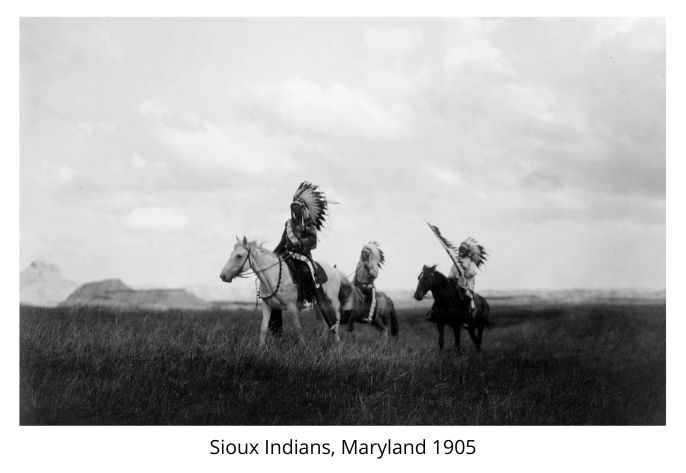
The land's first stewards were the Indigenous peoples, including tribes such as
the Algonquian, Iroquoian, and Sioux, whose intricate societies thrived for
thousands of years. They nurtured the land and its resources, forming complex
trade networks and cultural alliances.
The arrival of the Europeans in the 16th century marked a dramatic shift. It was
George Calvert, also known as the first Lord Baltimore, who requested a charter
from King Charles I for a territory in the New World. In 1634, his son Cecilius
Calvert, the second Lord Baltimore, established the Province of Maryland as a
haven for English Catholics fleeing religious persecution. Maryland, named after
the king's wife Queen Henrietta Maria, was the third English colony to be
settled in North America.
Maryland's early history is marked by tensions, primarily religious and
territorial. These were manifested in events such as the Protestant Revolution
of 1689. Despite these frictions, the colony prospered, its fertile land
yielding bountiful tobacco crops that quickly became the backbone of the
economy. Maryland's system of labor evolved from indentured servitude to
reliance on enslaved Africans, which left an indelible and painful mark on the
state's history.
As the winds of change began to blow in the 18th century, Maryland found itself
in the midst of the American Revolutionary War. The state contributed
significantly, providing troops and supplies. It was in the Maryland State House
that the Continental Congress ratified the Treaty of Paris in 1784, officially
ending the war.
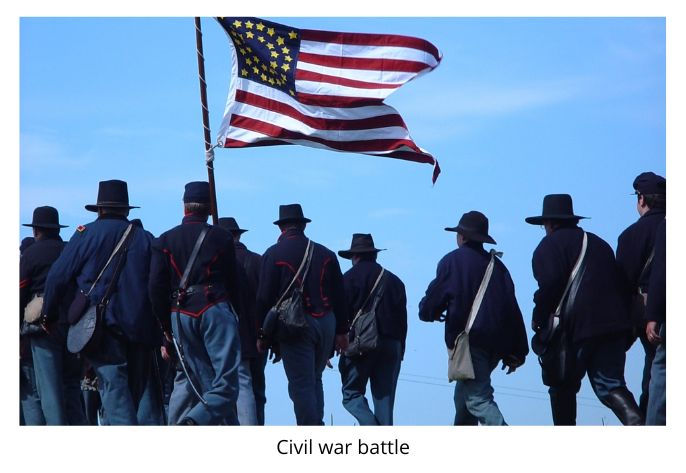 In the 19th century, Maryland's narrative was dominated by the Civil War.
Geographically and politically situated between the North and South, Maryland
was a border state with divided loyalties. The state saw significant action
during the war, including the Battle of Antietam, one of the war's bloodiest
single-day battles.
Following the abolition of slavery and the end of the Civil War, Maryland
transitioned into a more industrial economy. The founding of the Baltimore and
Ohio Railroad fueled the growth of Baltimore, and the city blossomed into a
crucial industrial and shipping center.
The 20th century saw Maryland transform yet again. Its cities thrived while its
rural areas remained a testament to its agricultural roots. The Civil Rights
Movement saw Maryland grappling with its past and striving toward equality and
justice for all its citizens.
Today, Maryland, known fondly as the "Free State" and the "Old Line State,"
reflects its rich, varied history in its landscapes and its people. From
bustling Baltimore to the tranquil shores of the Chesapeake Bay, the echoes of
the past can still be heard. As we delve into its history, we find lessons of
resilience, innovation, and the enduring struggle for freedom and equality. It
is a story that continues to unfold, inviting us to both reflect on the past and
look ahead to the future.
Maryland has one of the most convoluted shapes of any state. Two sections in the west are almost cut off by West Virginia and Pennsylvania, and Maryland also occupies part of the Delmarva peninsula.
Image: Reeds and a heron.
Text: "Maryland - Treasure the Chesapeake" (referring to Chesapeake Bay).
The Free State.
Home | States/Provinces | Subjects
